
An English love of Indian Chintz…
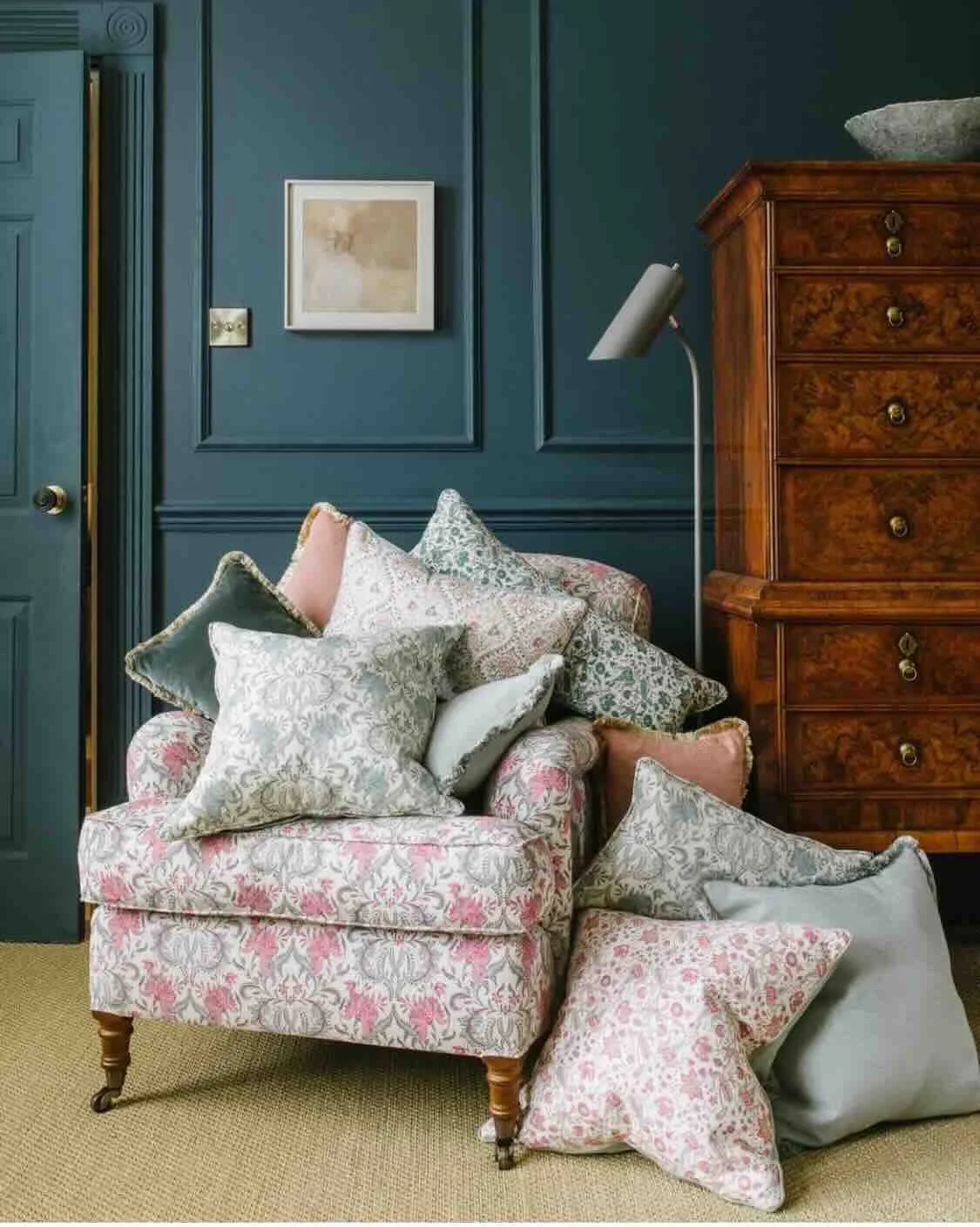
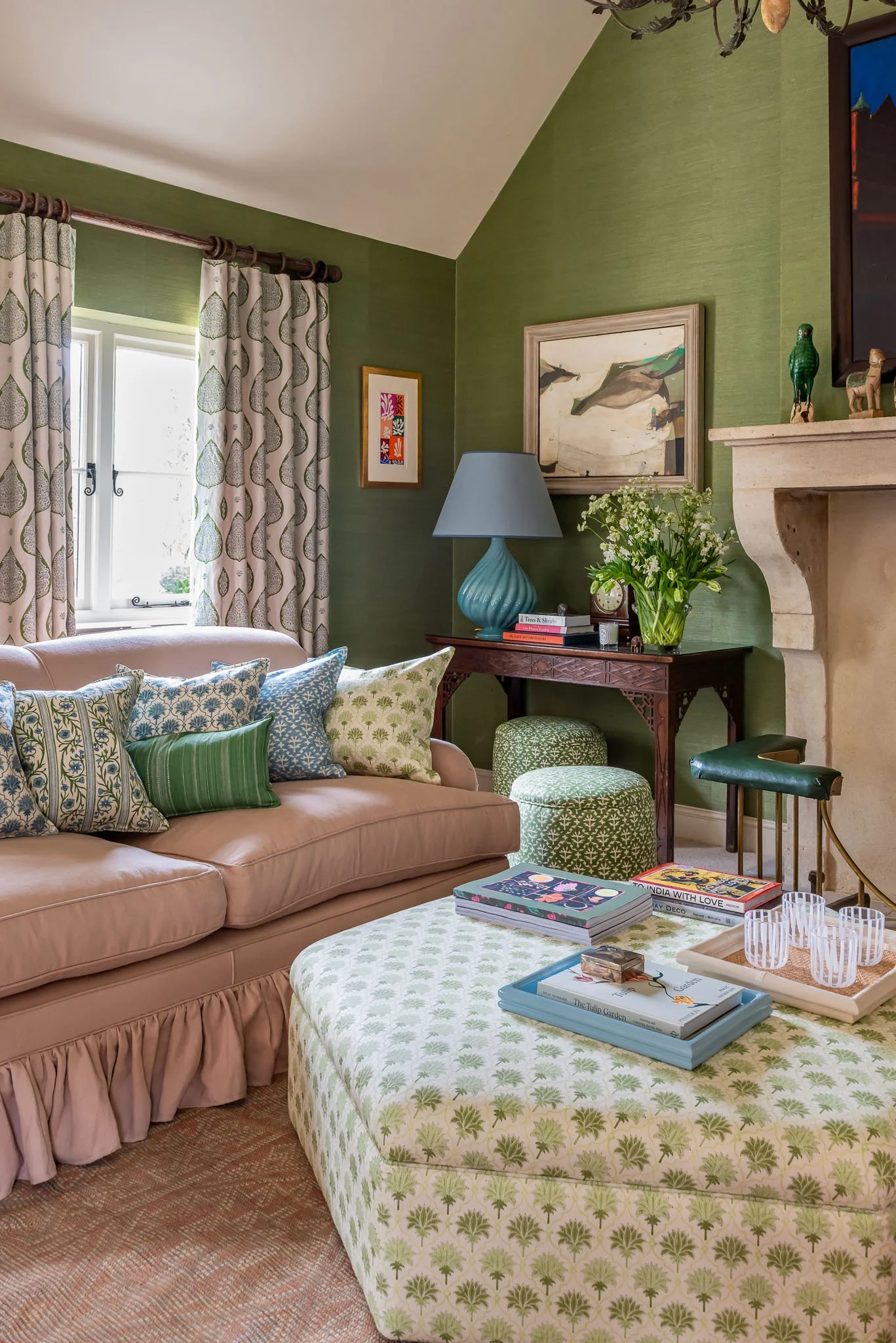
Pukka Print chintz-inspired designs used by Anbôise.
Our English gardens are at their very best in the summer, and I’ve spent many days over recent months wandering around gardens… time which has been exceptionally inspiring, feeding my mind with colour combinations, colour palettes, training my eyes to seek out what it is we love to grow on a terrace, in pots, up walls, plant in wild flower meadows…
As we move towards a new season, it leads me to thinking this is why we love our blowsy chintz so much, bringing our glorious herbaceous planting indoors to enjoy all year round… printing large, repeating floral patterns onto soft cotton to cover our beloved sofas, drape our windows, even a collection of chintzy cushions is just so comforting and pretty.
But did you know the word chintz actually originated from India back in the 1600s? It’s an Indian Hindi word - Chint - meaning speckled or sprayed and describes the sophisticated Indian textile tradition from the Coromandel coast that involves complex dyeing, mordanting and painting techniques.
The British, and Dutch, loved these bright red speckled backgrounds throwing into relief the fabulous Tree of Life designs centred on the wall hangings which were all the rage for two hundred years, and not just in homes but in fashion too.
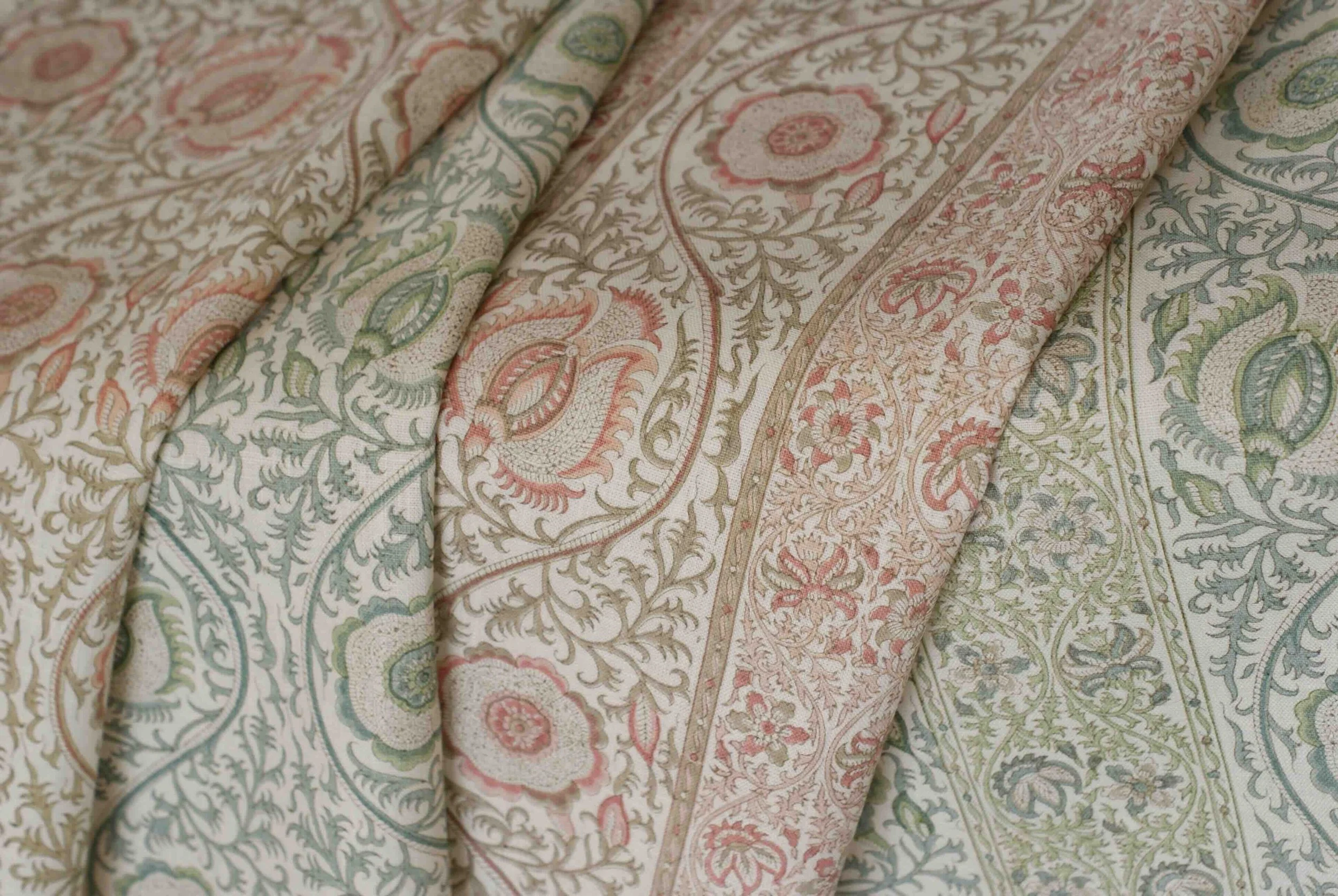
Pukka Print’s Palampore Stripe and Palam Ogee hand block printed linens.
Chintz became the go-to word used by the East India Company agents to describe this hugely popular textile trade. At its height it accounted for over 75% of all exports from India. Originally these lavishly painted, dyed and blockprinted hangings were used to hang on walls and as bed hangings replacing the much duller wool and crewel embroideries but what really attracted the Europeans was the exceedingly bright colours and the fastness of the colours. Quite simply the dyes used by the Indians, readily available on the Coromandel coast were far superior to what was found in Europe.
We went crazy for it - abundant floral designs surrounding the Tree of Life using the incredibly vivid Indigo blue and red chay root dyes that could only be achieved in this coastal geographical location were unimaginable treasure. We used Indian chintz to surround our beds, hang from our walls - we even started wearing Indian chintz such was the craze.
And what I particularly find fascinating and want to share with you is how the designs for these Indian chintz hangings evolved… and guess what, it’s from the Mughal obsession with gardens and also naturalistic painting. The Mughal Empire, particularly from the reigns of Akbar Jahangir and Shah Jahan in the 16th and 17th centuries, created a sophisticated court culture that celebrated gardens, flowers, luxury textiles and most importantly for us naturalistic design. One of the most important influences was the Mughal concept of the garden as paradise on earth and Mughal court artists began depicting individual flowering plants such as tulips, poppies and irises that we still plant and recognise today. Also, rather than creating abstract patterns, artists often rendered plants as though they were growing naturally from the ground. You can easily recognise these floral motifs in Indian miniature paintings and in the embellished borders in manuscripts.
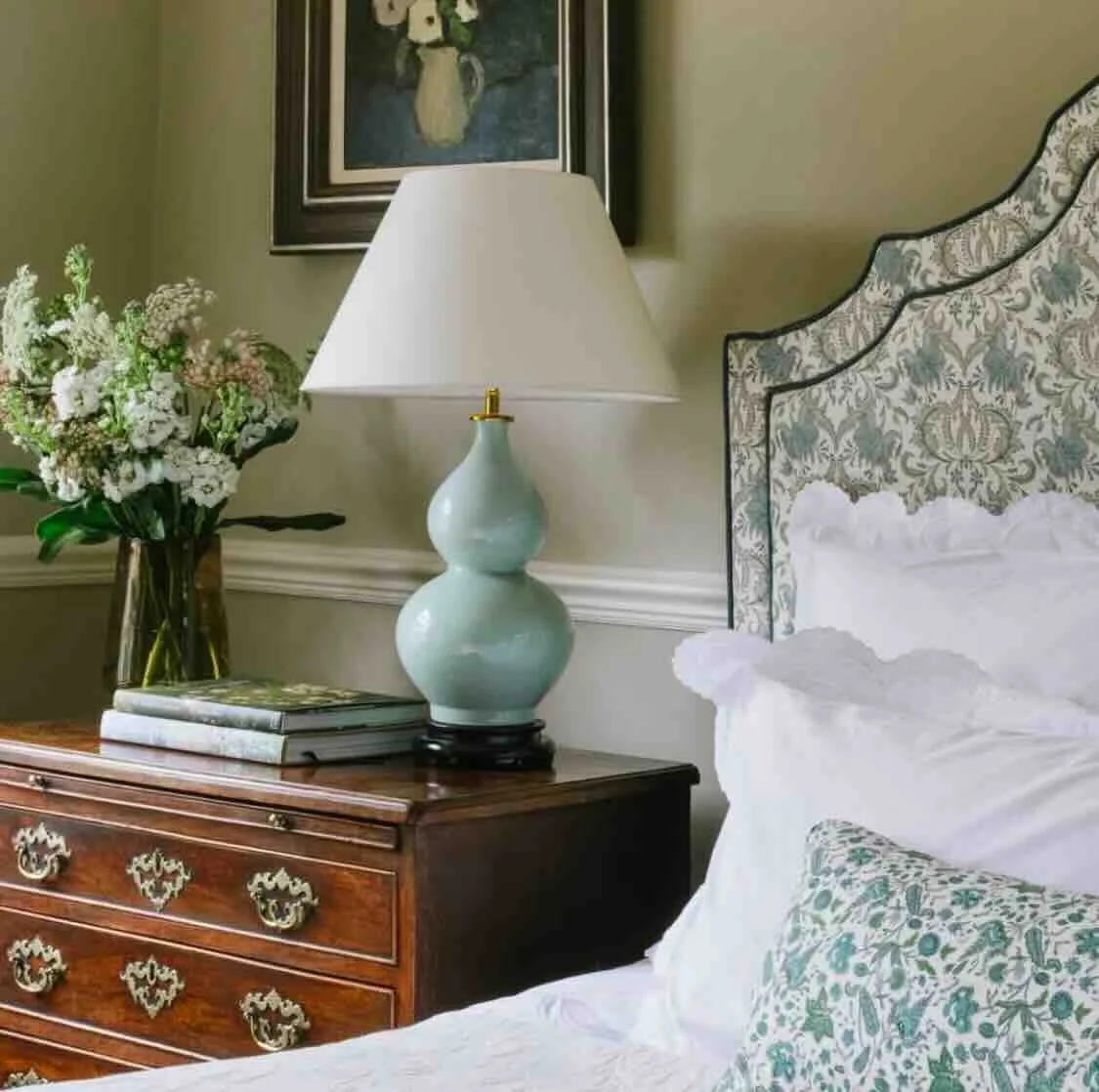
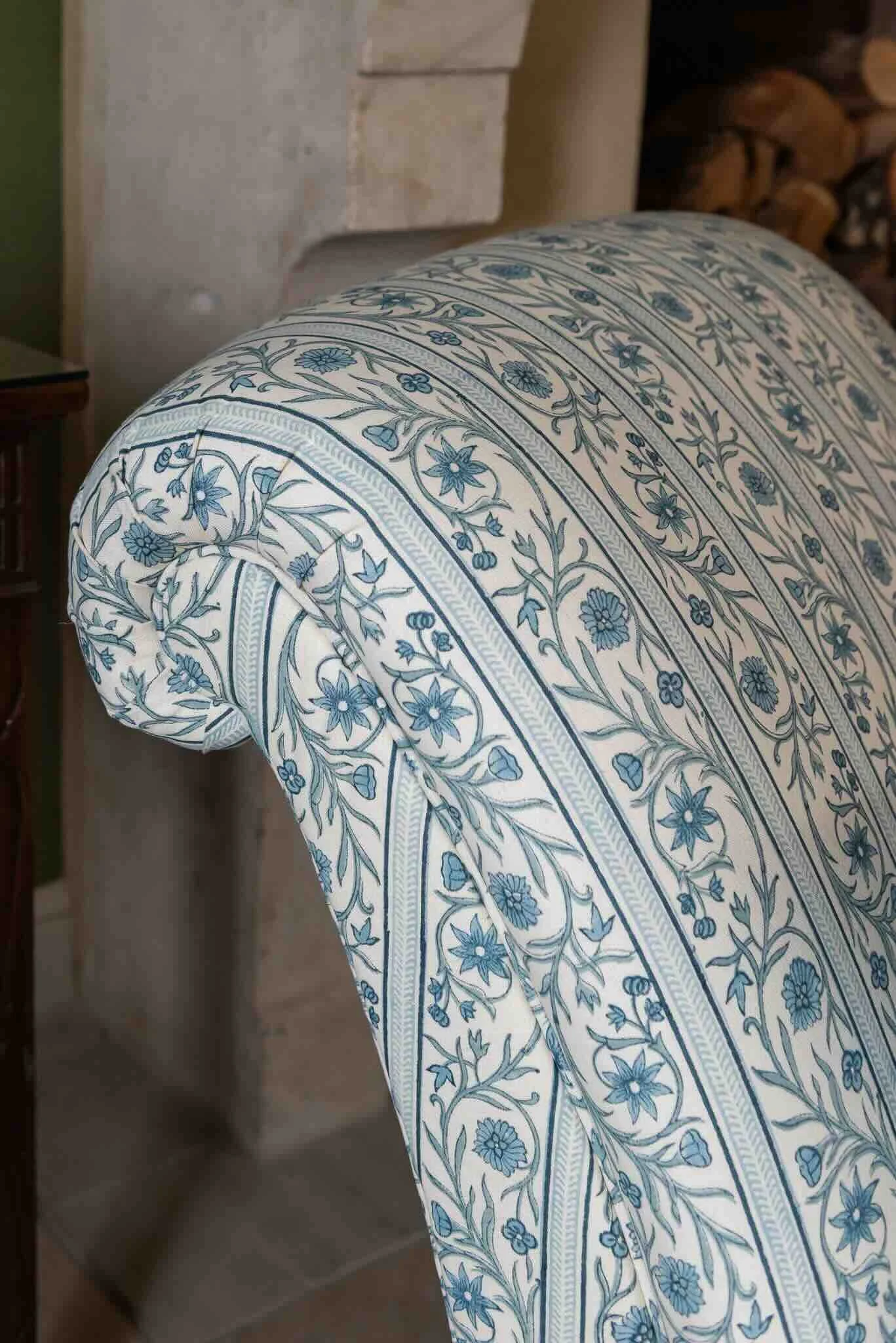
Under Jahangir especially, Mughal artists became fascinated with recording nature accurately and Court painters produced remarkably detailed studies of flowers, birds, and animals. This naturalistic approach spread across the Mughal decorative arts, including textiles. When I study the seventeenth-century chintzes kept in the V&A I really notice the shading on distinct flower species, realistic leaves and stems and the compositions. And we can trace the “tree of life” format used in the Indian Palampore or wall hangings that then go on to influence repeat flowering patterns.
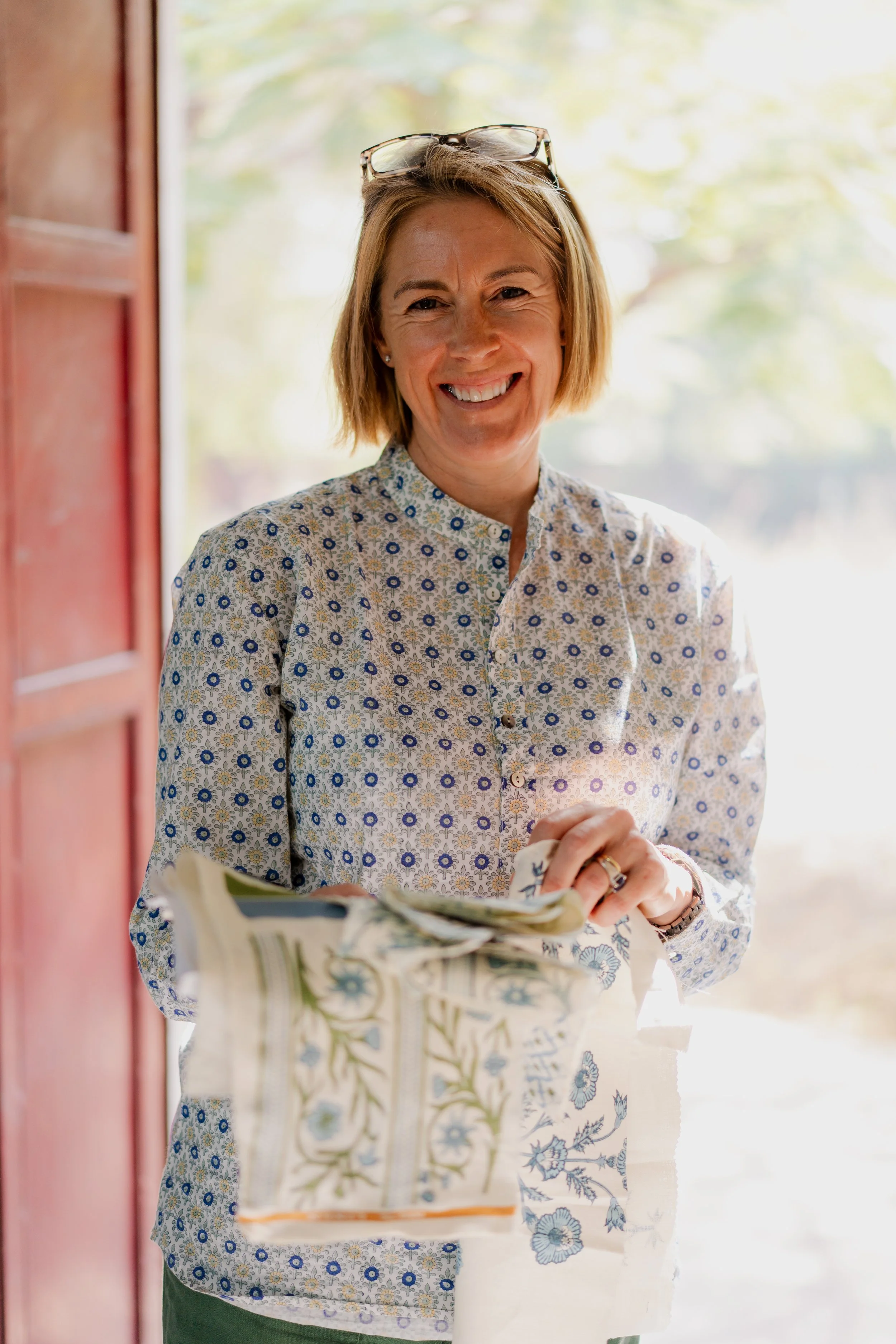
Jools in Jaipur
When chintzes reached Britain, France, and the Netherlands in the late seventeenth century, Europeans had seen floral textiles before, but not with this level of colourfastness and botanical sophistication. And this unique cultural Mughal phenomenon crossed over and intersected with the European botanical artists painting beautiful watercolours of exotic and domestic plants. Agents for the East India Company would send back to India inspiration for the Coromandel coast artists to copy and immerse into the Tree of Life Palampores. We can recognise vases of cut flowers, tulip heads, iris and peonies hand painted into the chintz designs. I think that the trailing vine borders surrounding these immense designs were hand blocked and also the repeating small singular floral sprigs look like block printing.
English aristocrats began importing Indian chintzes in huge quantities and the fashion evolved for English interiors to feature glorious flowering vines, exotic blooms and Tree of Life patterns in bright cotton furnishing drapes. The British and Dutch were therefore buying not merely cotton cloth but an aesthetic shaped by one of the most sophisticated court cultures of the early modern world, we really can draw a direct line from Mughal garden imagery to eighteenth-century English bed hangings, nineteenth-century floral wallpapers, and ultimately the layered floral interiors associated with Nancy Lancaster and John Fowler in the twentieth century. The floral room that many people think of as quintessentially English has surprisingly deep roots in Mughal India…
Over the years I have collected so many books written about Indian textiles and the textile trade between India and Europe, here are a few details of the books I especially reference:
Origins of Chintz, by John Irwin and Katharine B Brett
Chintz, by Rosemary Crill
Homage to Kalamkari, Marg Publications
Jools Cornell, October 2026