
Pukka Print Sustainability
Our commitment to responsible design
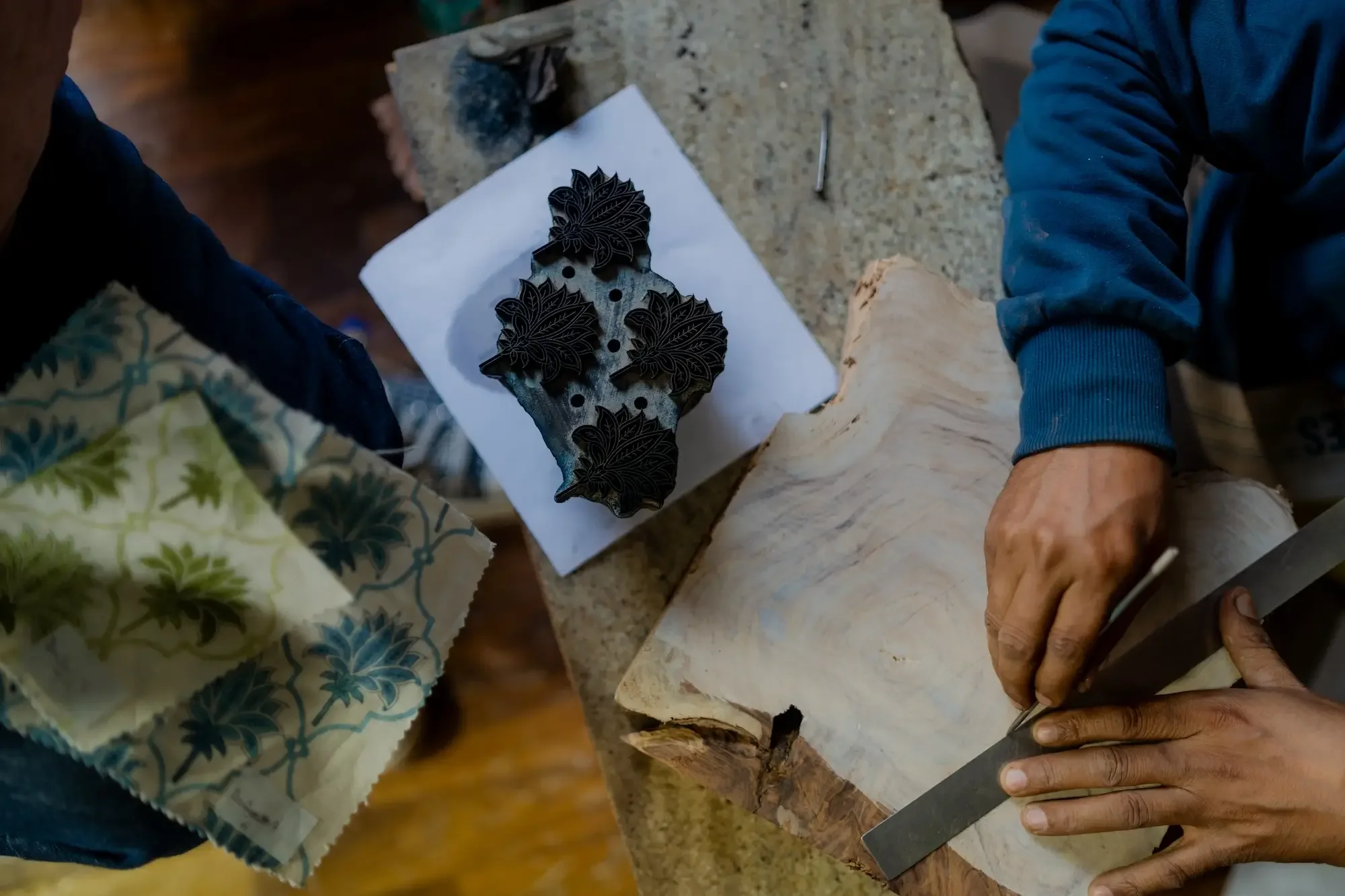
At the heart of Pukka Print is a dedication to championing the very best of Indian craftsmanship, supporting the ancient craft of hand block printing by showcasing the incredible talent of the artisans we work with to a modern, global audience. We are committed to operating in the most sustainable way possible, and to learning, evolving and adapting to continually improve as we move towards a more environmentally friendly future for the textiles industry.
Here, we share the journey of our fabrics from beginning to end, to offer a transparent view of how our fabrics are made and distributed…
Materials
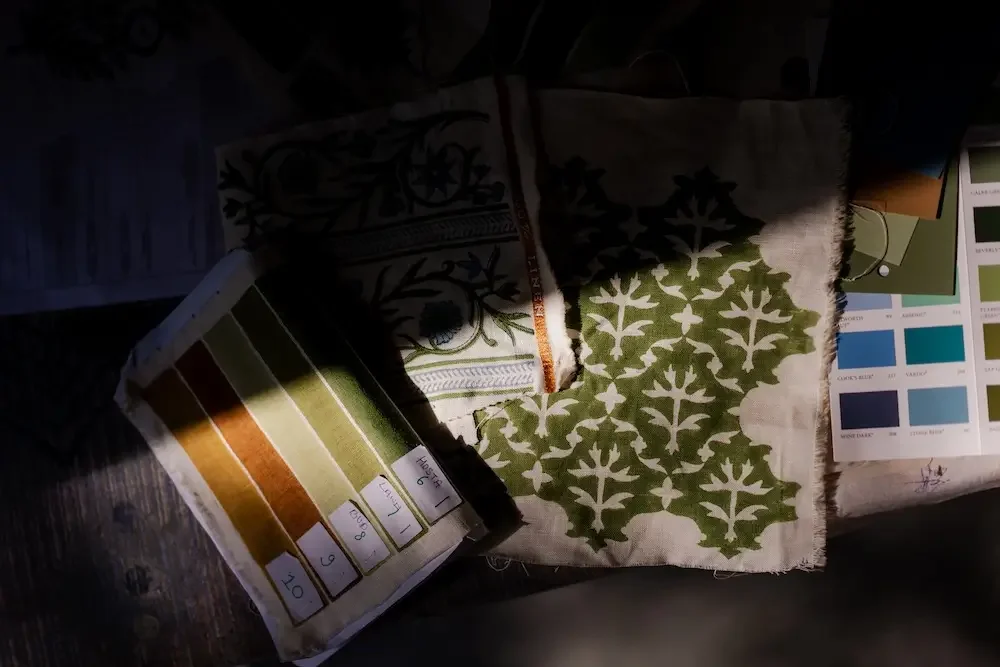
The linen fabric we print onto is machine woven in Bangalore, and purchased through a wholesaler in Jaipur. Our pigment inks are supplied by Archroma, whose commitment to sustainability can be seen here.
Texcraft Park & Water Use
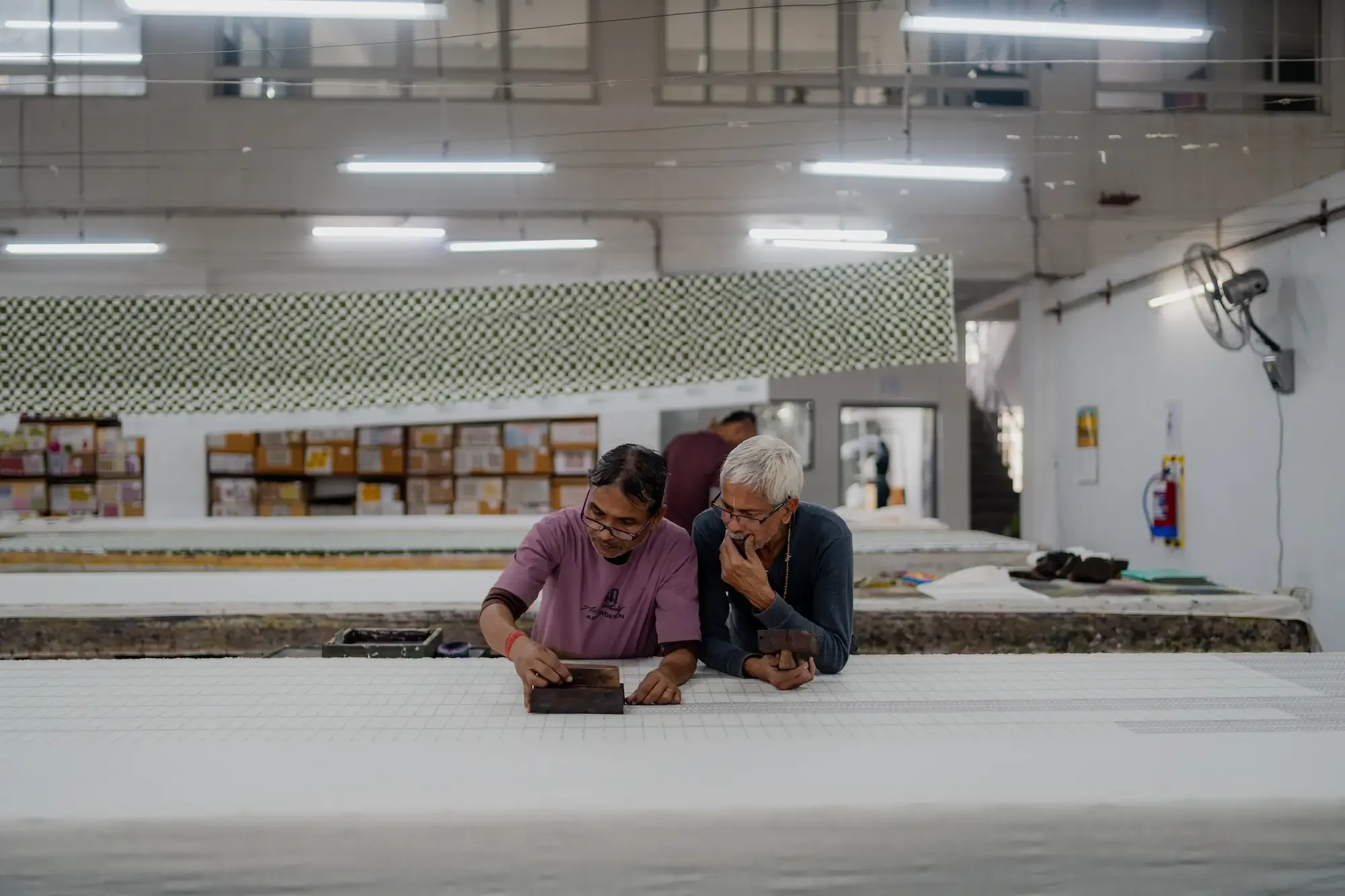
Our partner hand block printing workshop is located within Texcraft Park, situated in Bagru, southwest of Jaipur. It is the result of a collaboration between Jaipur Block, the EC fundedSWITCH Asia Project (Sustainable Textiles for Sustainable Development) and the Indian government’s ‘Scheme for Integrated Textile Parks’. A key aspect of Texcraft is its Common Effluent Treatment Plan (CETP) which harvests and recycles water, while promoting socially responsible health and safety standards in the production process. Our workshop managers are key stakeholders in this initiative.
The CETP recovers over 80% of the wastewater from textile processes, returning it to the system for use in dyeing, printing, and washing. The system can treat 0.5 million litres of effluent per day, and huge underground tanks store rainwater harvested during the Monsoon season.
Our workshop uses minimum water and any used is recycled through the CETP. In the hand block printing process, water is used for making the colours and washing the colour buckets, blocks, and ink trays. The workshop has been granted a ‘Consent to Operate’ certificate from the Rajasthan Pollution Control Board.
Texcraft Park also has a sewage treatment plant which recovers water from sewage lines, treating it and reusing it in the sewage system. Excess water from this will be used for landscape irrigation.
Our People
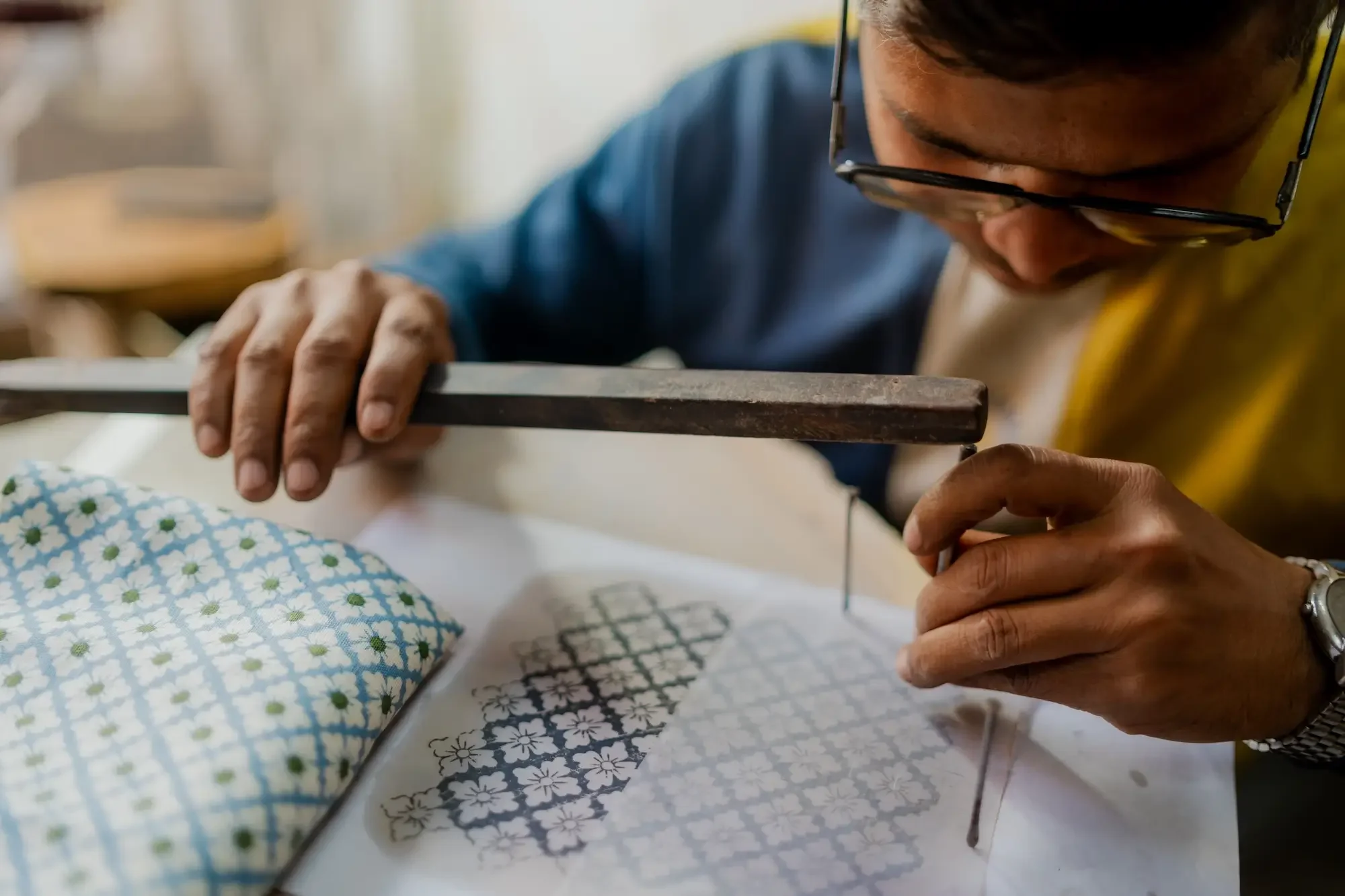
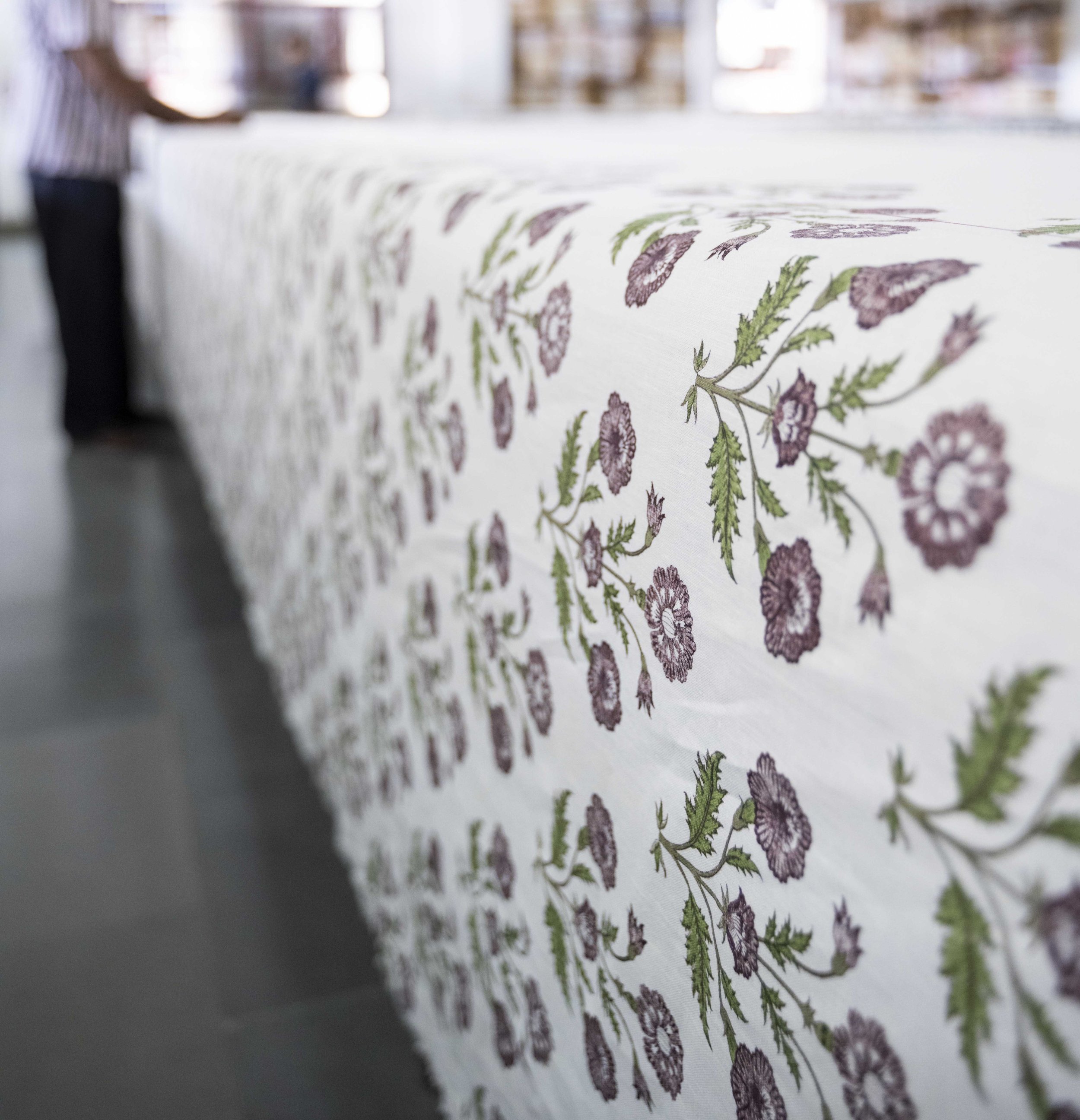
Each design is printed in small batches by hand, with a maximum of 10m printed per batch. The skilful artisans we work with place each block precisely by hand, using their trained eye and wealth of experience. The sound of printing is mesmerising, as the rhythm of hands pressing down the blocks creates an audible and visible landscape while the patterns begin to take shape with colour.
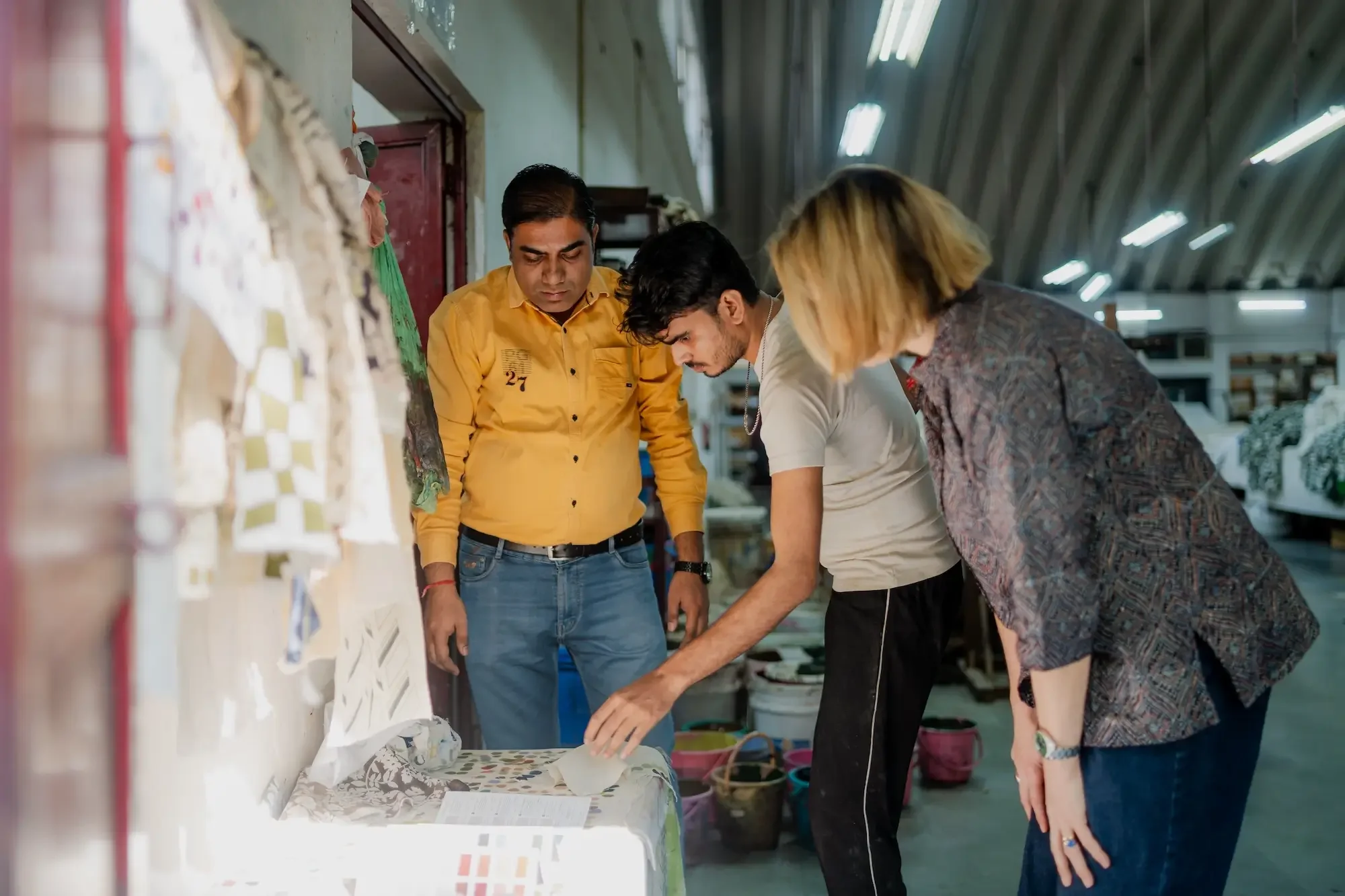
Hand block printing imbues our fabrics with an inherent human dynamism which cannot be machine replicated, and the workshop is committed to investing in the artisans who continue this heritage craft. Each of the forty employees are full-time, salaried staff. They each receive the mandatory employee state accident and health insurance for themselves and their family, and a free bus is provided every morning and evening which has three drop off points for the staff.
The workshop itself has high standards with a recent government inspection only noting one minor signage issue. The working day runs from 9.30am to 5.30pm with two 15-minute tea breaks and a 45-minute lunch break. Lunch can be enjoyed outside in a garden plot next to the workshop.
Logistics
Once the 10m lengths of fabric are printed, they are rolled onto cardboard tubes, packed, and sent to our UK distribution centre in Petersfield via air freight. Our minimum order with the Jaipur workshop is 50m per pattern/colourway and we try to ensure each order is as efficient as possible. Our UK logistics supplier is UPS.
Our distribution centre is also committed to reducing its impact where possible. Storing our fabrics and distributing them for us, the team cut each order and pack it onto a cardboard tube which can be recycled through most waste recycling schemes. The roll is then packaged into a wrap made from post-consumer waste which protects the fabric from being damaged. 93% of waste is recycled and the company is trialling new materials such as potato starch wraps and alternatives for vinyl tape.
Travel is carefully considered, with the flights being offset each time through Gold Standard Marketplace. Digital communications are used to minimise travel where possible.
Sampling & Surplus
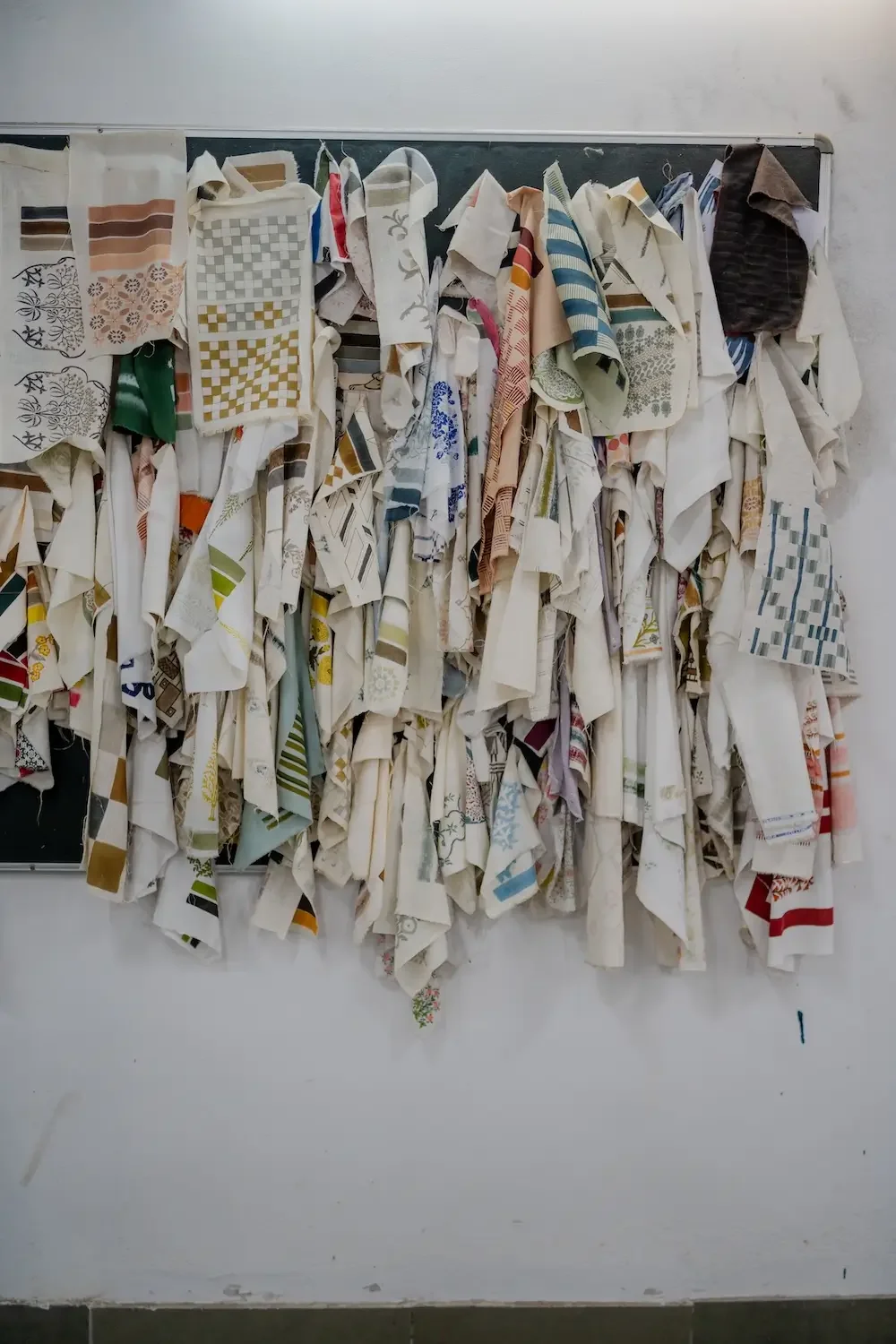
Fabric offcuts are used for the sampling process and, once the patterns and colours have been confirmed, we use no more than 5m of fabric to cut into small sample swatches which we keep as a reference.
In the workshop itself, cloths are used for padding the tables which are then recycled and repurposed alongside scraps of the fabrics, thanks to the skills of the sewing team. They create bags and cushion covers to their own designs using the surplus and waste fabrics they salvage.
When fabric is removed from the main collection, it is transferred to our ‘Last Chance to Buy’ section.
Showrooms & Representatives
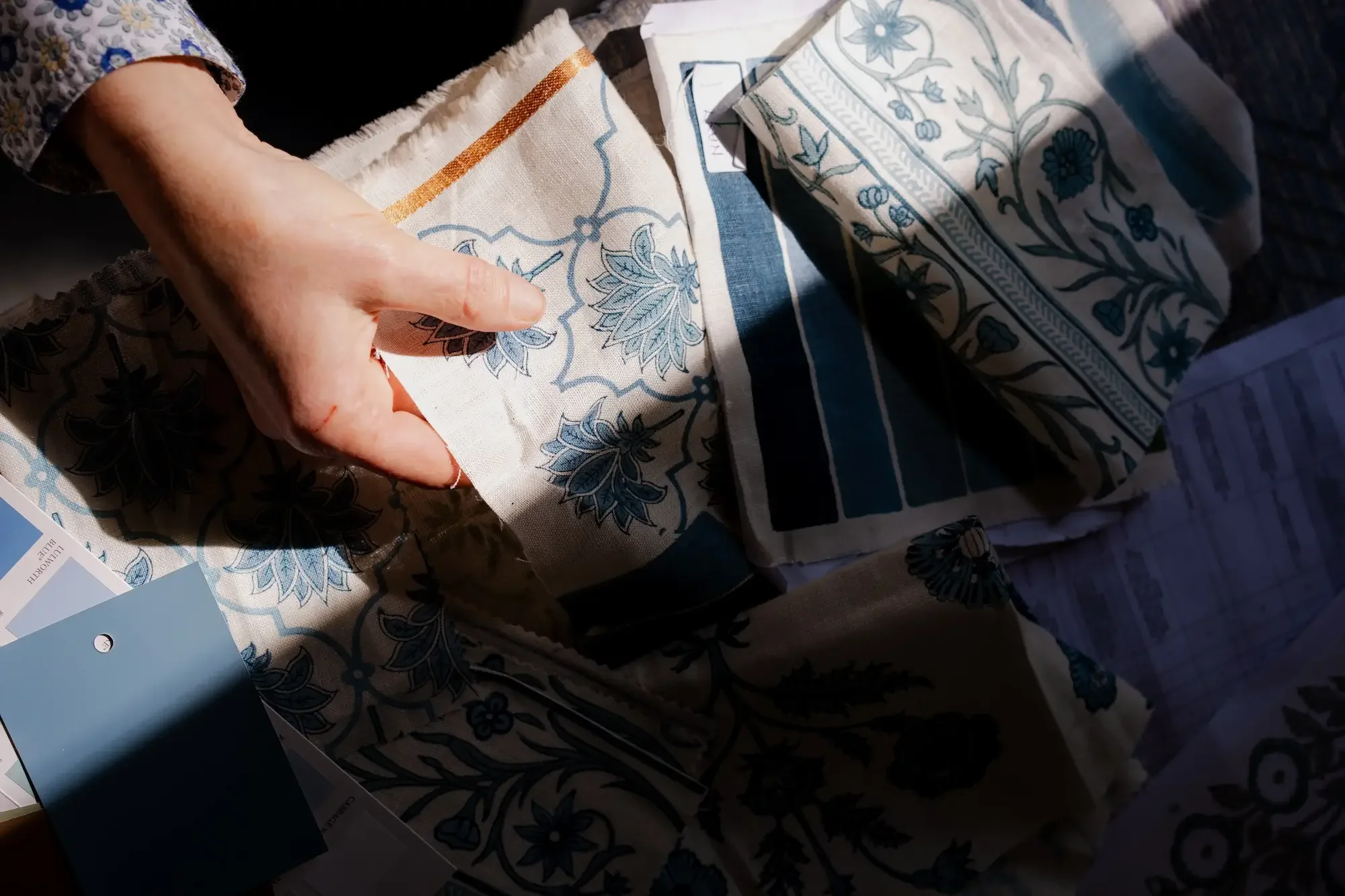
Each of our showrooms and representatives holds sample lengths and small swatches of every current fabric. Once orders are placed with the showroom, Pukka Print will fulfil the order accordingly.